Introduction
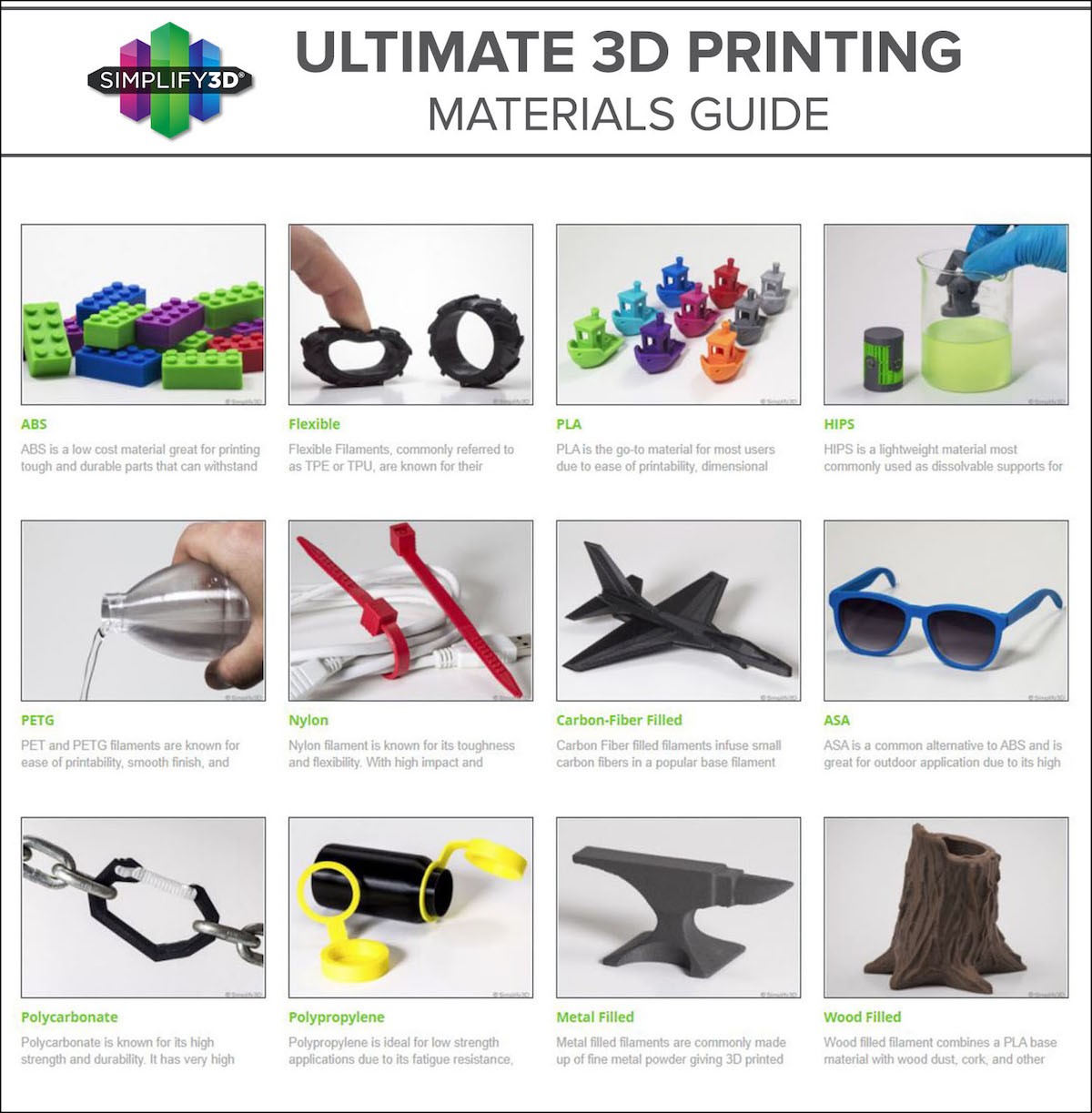
Selecting the appropriate material is crucial for the success of any 3D printing project. The material's properties will directly impact the functionality, durability, and aesthetics of the final product. This guide provides a comprehensive overview of common 3D printing materials, their characteristics, and suitable applications, helping you make informed decisions for your specific needs. At Printie 3D, we understand the importance of material selection and are here to help you choose the best option for your project.
Understanding Material Properties
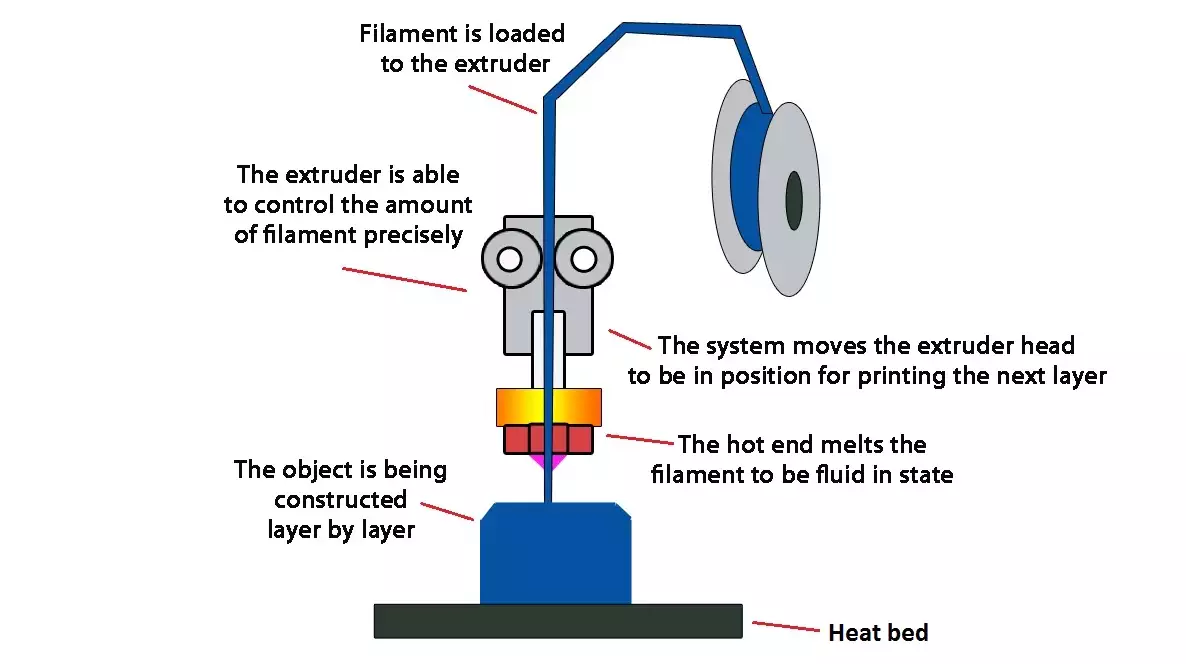
Before diving into specific materials, it's essential to understand the key properties that define their performance:

- Tensile Strength: The material's resistance to breaking under tension (pulling force). Measured in MPa (Megapascals).
- Elongation at Break: The percentage a material can stretch before breaking. Indicates ductility.
- Impact Strength: The material's ability to withstand sudden impacts without fracturing. Measured in Joules (J).
- Hardness: The material's resistance to indentation. Often measured using the Rockwell or Shore scales.
- Heat Deflection Temperature (HDT): The temperature at which a material begins to deform under a specific load. Important for parts exposed to heat. Measured in °C.
- Chemical Resistance: The material's ability to withstand exposure to various chemicals without degradation.
- UV Resistance: The material's resistance to degradation from ultraviolet (UV) light exposure, important for outdoor applications.
- Flexibility: The material's ability to bend without breaking.
- Biocompatibility: The material's compatibility with living tissue, crucial for medical applications.
Common 3D Printing Materials
This section outlines some of the most commonly used 3D printing materials, categorized by type.
Thermoplastics (FDM Printing)
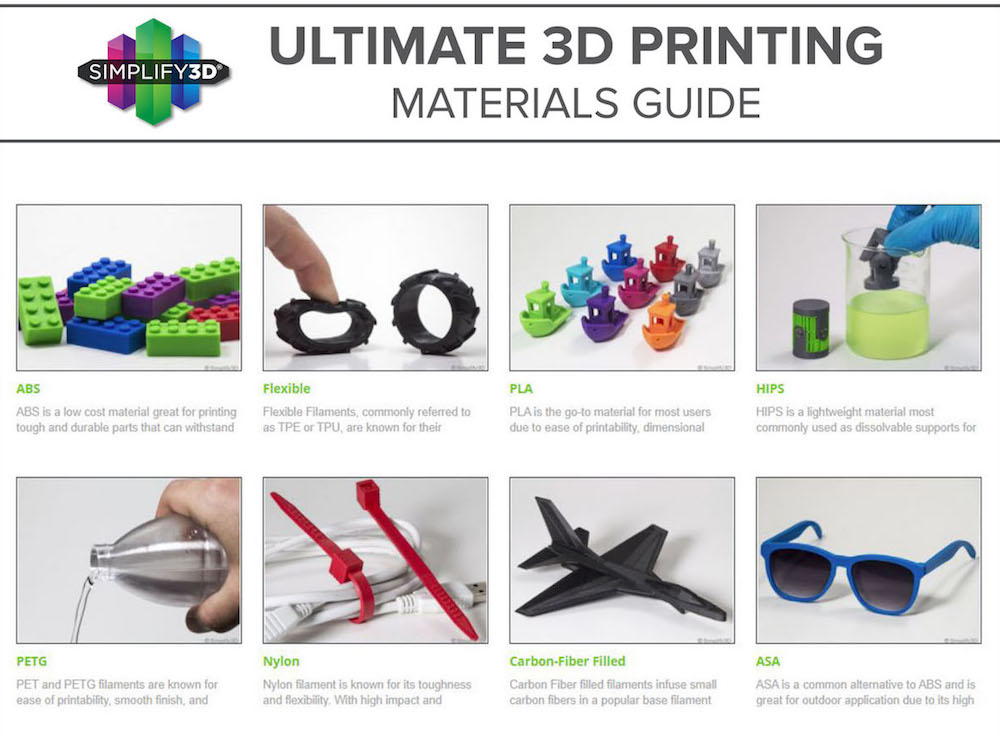
Thermoplastics are polymers that become pliable or moldable above a specific temperature and solidify upon cooling. They are primarily used in Fused Deposition Modeling (FDM) 3D printing.
- PLA (Polylactic Acid):
- Description: Biodegradable thermoplastic derived from renewable resources like corn starch or sugarcane.
- Pros: Easy to print, low fumes, low warping, good for detailed prints.
- Cons: Low heat resistance (HDT around 55°C), can be brittle.
- Typical Applications: Prototyping, educational projects, decorative items.
- Printing Temperature: 190-220°C
- Bed Temperature: 20-60°C (often not required)
- ABS (Acrylonitrile Butadiene Styrene):
- Description: Durable, impact-resistant thermoplastic known for its strength.
- Pros: High impact resistance, good heat resistance (HDT around 80-100°C), can be post-processed with acetone vapor smoothing.
- Cons: Higher printing temperatures required, prone to warping, emits fumes (requires good ventilation).
- Typical Applications: Functional prototypes, enclosures, automotive parts.
- Printing Temperature: 220-250°C
- Bed Temperature: 80-110°C
- PETG (Polyethylene Terephthalate Glycol-modified):
- Description: A glycol-modified version of PET, offering improved printability and strength.
- Pros: Easy to print, smooth surface finish, water-resistant, good strength, can be food safe (check specific filament certifications).
- Cons: Can be stringy during printing, sensitive to moisture.
- Typical Applications: Food containers, mechanical parts, outdoor applications.
- Printing Temperature: 220-250°C
- Bed Temperature: 70-90°C
- Nylon (Polyamide):
- Description: Tough, semi-flexible thermoplastic with high impact and abrasion resistance.
- Pros: High tensile strength, good chemical resistance, high abrasion resistance, relatively flexible.
- Cons: Hygroscopic (absorbs moisture from the air), requires dry storage, higher printing temperatures required.
- Typical Applications: Gears, hinges, functional parts requiring durability.
- Printing Temperature: 240-260°C
- Bed Temperature: 80-100°C
- TPU/TPE (Thermoplastic Polyurethane/Thermoplastic Elastomer):
- Description: Flexible and elastic thermoplastics with rubber-like properties.
- Pros: Flexible, impact-resistant, good vibration dampening.
- Cons: Can be difficult to print (especially softer varieties), requires careful retraction settings.
- Typical Applications: Phone cases, seals, flexible joints, wearables.
- Printing Temperature: 210-230°C
- Bed Temperature: 30-60°C
- Carbon Fiber Filled Filaments:
- Description: Thermoplastic filaments infused with carbon fibers to enhance strength and stiffness.
- Pros: Increased strength and stiffness, improved dimensional stability.
- Cons: Abrasive to nozzles (requires hardened steel nozzles), can be more brittle than unfilled plastics, more expensive.
- Typical Applications: High-performance parts, tooling, jigs, fixtures.
- Printing Temperature: Varies depending on the base material (PLA, ABS, Nylon). Consult filament manufacturer's recommendations.
- Bed Temperature: Varies depending on the base material.
Thermosets (Resin Printing)
Thermosets are polymers that undergo irreversible chemical changes when heated, forming a rigid, cross-linked structure. They are primarily used in Stereolithography (SLA), Digital Light Processing (DLP), and PolyJet 3D printing.
- Standard Resins:
- Description: General-purpose resins offering a balance of properties.
- Pros: High resolution, smooth surfaces, wide range of colors.
- Cons: Can be brittle, limited heat resistance.
- Typical Applications: Prototypes, models, decorative items.
- Tough Resins:
- Description: Resins formulated for increased strength and impact resistance.
- Pros: Higher impact resistance, more durable than standard resins.
- Cons: May have slightly lower resolution than standard resins.
- Typical Applications: Functional prototypes, snap-fit parts.
- Flexible Resins:
- Description: Resins designed to be flexible and elastic.
- Pros: Flexible, good elongation, can withstand repeated bending.
- Cons: Can be challenging to print, requires support structures.
- Typical Applications: Seals, gaskets, wearables.
- High-Temperature Resins:
- Description: Resins formulated to withstand high temperatures.
- Pros: High heat resistance, can be used for tooling and molds.
- Cons: Can be more expensive than other resins.
- Typical Applications: Molds, tooling, heat-resistant components.
- Castable Resins:
- Description: Resins designed for investment casting processes.
- Pros: Burns out cleanly, leaving minimal ash.
- Cons: Can be brittle, requires specialized equipment for casting.
- Typical Applications: Jewelry, dental restorations.
- Medical-Grade Resins:
- Description: Biocompatible resins suitable for medical and dental applications.
- Pros: Biocompatible, can be sterilized.
- Cons: Requires regulatory approvals for medical use.
- Typical Applications: Surgical guides, dental models, implants.
Learn more about resin printing techniques and the wide range of available resins at Printie 3D.
Metals (SLS, DMLS, SLM Printing)
Metals are used in Selective Laser Sintering (SLS), Direct Metal Laser Sintering (DMLS), and Selective Laser Melting (SLM) 3D printing. These processes fuse metal powders together to create solid parts.
- Aluminum: Lightweight, good strength-to-weight ratio, good thermal conductivity.
- Stainless Steel: High strength, corrosion resistance, good weldability.
- Titanium: High strength, lightweight, excellent corrosion resistance, biocompatible.
- Nickel Alloys: High strength at high temperatures, excellent corrosion resistance.
- Cobalt-Chrome Alloys: High wear resistance, biocompatible, often used in medical implants.
Choosing the Right Material: A Step-by-Step Approach
Follow these steps to select the best material for your 3D printing project:
- Define the Application: What is the intended use of the part? What are the functional requirements?
- Identify Key Properties: Which material properties are most critical for the application (e.g., strength, heat resistance, flexibility)?
- Consider the Environment: Will the part be exposed to chemicals, UV light, or extreme temperatures?
- Evaluate Printing Process Compatibility: Which 3D printing processes are suitable for the desired material and level of detail?
- Assess Post-Processing Requirements: Will the part require painting, sanding, or other post-processing steps?
- Consider Cost: Balance material properties with budget constraints.
- Test and Iterate: Print prototypes to validate material selection and design.
Post-Processing Techniques
Many 3D printed parts require post-processing to improve their surface finish, strength, or functionality. Common techniques include:
- Sanding: Smoothing rough surfaces.
- Painting: Adding color and protection.
- Polishing: Creating a glossy surface.
- Vapor Smoothing: Smoothing surfaces using chemical vapors (e.g., acetone vapor for ABS).
- Coating: Applying protective layers for improved wear resistance or chemical resistance.
- Metal Plating: Adding a metal layer for improved aesthetics or conductivity.
Conclusion
Choosing the right material is a critical step in the 3D printing process. By understanding the properties of different materials and considering the requirements of your application, you can ensure the success of your project. Contact us at Printie 3D for expert advice and assistance in selecting the best material for your needs.