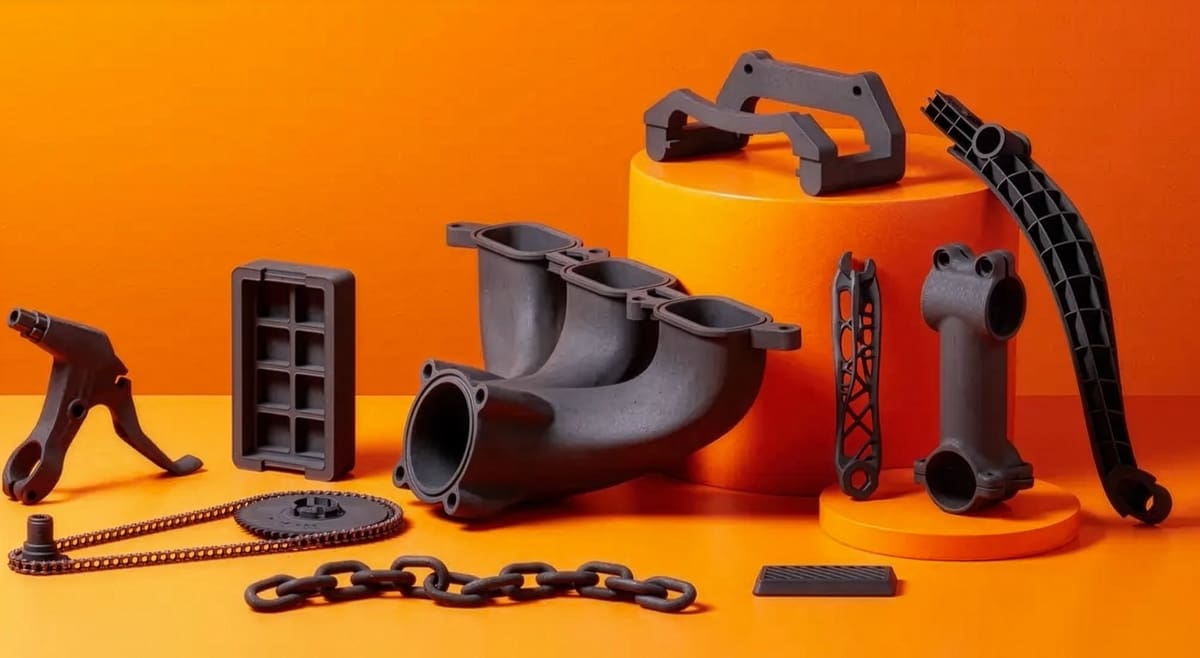
Understanding Carbon Fiber 3D Printing
Carbon fiber 3D printing represents a significant leap forward in additive manufacturing, offering the potential to create parts with exceptional strength, stiffness, and lightweight properties. At Printie 3D, Jordan's leading 3D printing company since 2012, we've been closely following and implementing this technology to meet the evolving needs of our clients across various industries.

This blog post will delve into the intricacies of carbon fiber 3D printing, exploring its benefits, applications, challenges, and future trends. Whether you're an engineer, designer, hobbyist, or simply curious about this cutting-edge technology, this guide will provide valuable insights.
What is Carbon Fiber?
Carbon fiber is a material composed of extremely thin strands of carbon atoms bonded together in a crystalline structure. These fibers are incredibly strong and stiff for their weight, making them ideal for applications where high performance and weight reduction are critical. Carbon fiber is often combined with a matrix material, such as epoxy or nylon, to create a composite material.
How Carbon Fiber 3D Printing Works
Carbon fiber 3D printing typically involves two main approaches:
- Carbon Fiber Reinforced Filament (CFRF): This method uses filaments infused with short carbon fibers. These filaments are printed using Fused Deposition Modeling (FDM), where the material is extruded layer by layer to create the desired shape.
- Continuous Carbon Fiber (CCF) Reinforcement: This more advanced technique involves embedding continuous strands of carbon fiber within a thermoplastic matrix during the printing process. This results in parts with significantly higher strength and stiffness compared to CFRF.
At Printie 3D, we utilize both CFRF and explore CCF technologies to cater to a wide range of client requirements. To better understand the processes involved, explore our FDM 3D Printing services.
Benefits of Carbon Fiber 3D Printing
Carbon fiber 3D printing offers numerous advantages over traditional manufacturing methods and other 3D printing materials:
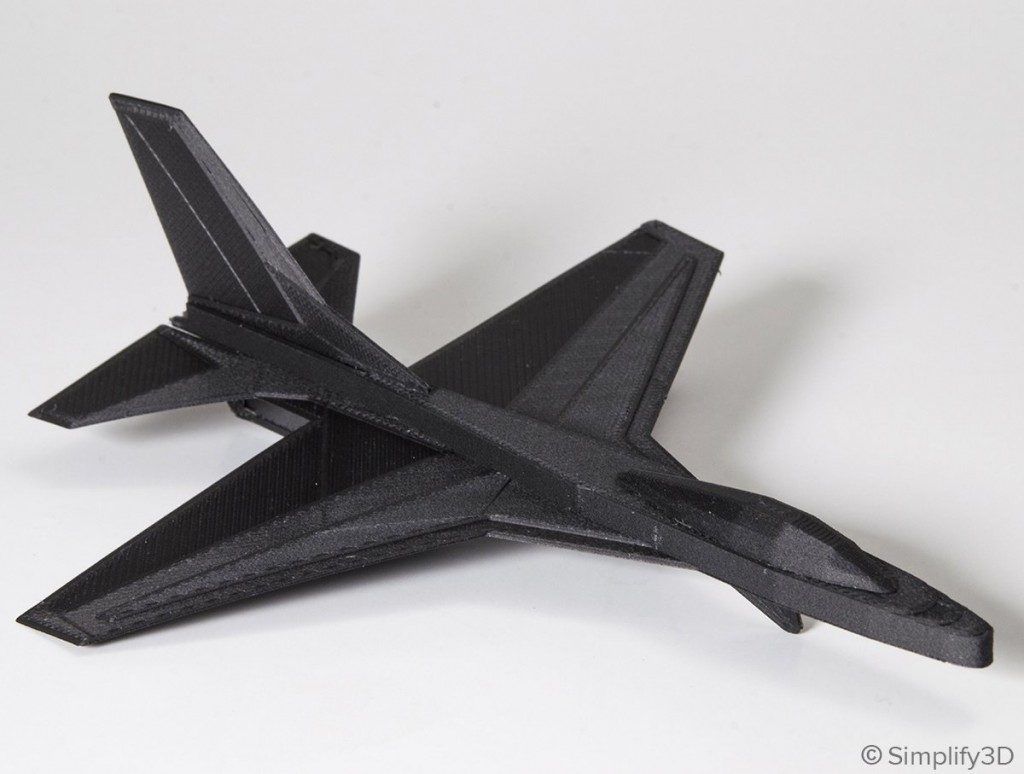
- High Strength-to-Weight Ratio: Carbon fiber parts are incredibly strong and stiff while remaining lightweight, making them ideal for aerospace, automotive, and sports equipment applications.
- Dimensional Stability: Carbon fiber composites exhibit excellent dimensional stability, meaning they are less prone to warping or shrinking during and after printing.
- High Heat Resistance: Carbon fiber materials can withstand high temperatures without significant deformation, making them suitable for demanding environments.
- Chemical Resistance: Carbon fiber composites are resistant to many chemicals, making them suitable for industrial applications.
- Design Freedom: 3D printing allows for the creation of complex geometries and intricate designs that would be difficult or impossible to manufacture using traditional methods. This is a key advantage for the Automotive & Aerospace industries.
- Customization: Carbon fiber 3D printing enables the production of customized parts tailored to specific needs, allowing for greater flexibility and optimization.
Applications of Carbon Fiber 3D Printing
The unique properties of carbon fiber 3D printed parts make them suitable for a wide range of applications across various industries:
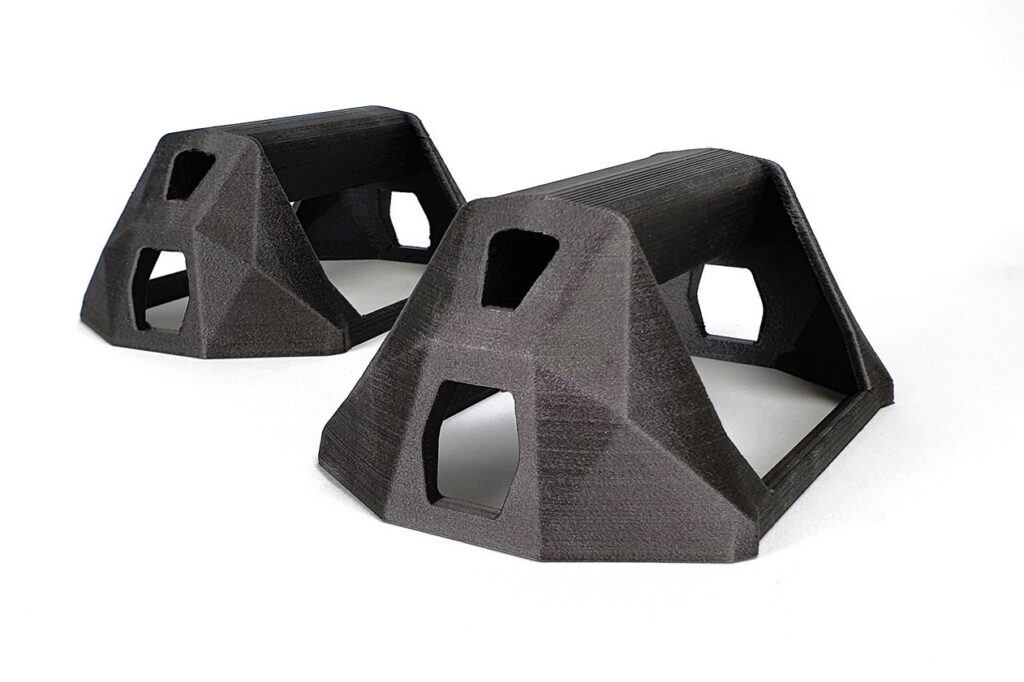
- Aerospace: Aircraft components, drone parts, and satellite structures.
- Automotive: Lightweight chassis components, interior parts, and tooling.
- Manufacturing: Jigs, fixtures, tooling, and end-of-arm tooling for robots.
- Sports Equipment: Bicycle frames, racing helmets, and prosthetic limbs.
- Medical: Orthotics, prosthetics, and surgical guides.
- Architecture & Engineering: Creating complex and lightweight structural components for Architecture & Engineering projects.
In Jordan and the wider Middle East, we're seeing increasing interest in carbon fiber 3D printing for applications in the automotive, aerospace, and manufacturing sectors. Companies are seeking to leverage the technology to improve performance, reduce weight, and enhance design flexibility.
Challenges and Considerations
While carbon fiber 3D printing offers significant advantages, there are also challenges and considerations to keep in mind:
- Cost: Carbon fiber filaments and continuous fiber reinforcement systems can be more expensive than other 3D printing materials.
- Material Properties: The mechanical properties of carbon fiber 3D printed parts can vary depending on the printing parameters, fiber alignment, and matrix material.
- Health and Safety: Inhaling carbon fiber dust can be hazardous, so proper ventilation and personal protective equipment are essential during printing and post-processing.
- Surface Finish: Carbon fiber 3D printed parts may require post-processing to achieve a smooth surface finish.
- Design Considerations: Designing for carbon fiber 3D printing requires careful consideration of fiber orientation, layer adhesion, and support structures.
It's crucial to consult with experienced 3D printing professionals, like the team at Printie 3D, to address these challenges and ensure successful project outcomes.
The Future of Carbon Fiber 3D Printing
The carbon fiber 3D printing market is projected to experience significant growth in the coming years, driven by increasing adoption in key industries. According to market research, the carbon fiber 3D printing material market is expected to grow from US$0.078 billion in 2025 to US$0.333 billion in 2030, representing a compound annual growth rate (CAGR) of 33.83%.
Key Trends Shaping the Future
- Material Development: Ongoing research and development are focused on creating new carbon fiber filaments and composite materials with improved properties and lower costs.
- Process Optimization: Advancements in printing technology and software are enabling more precise control over the printing process, leading to improved part quality and consistency.
- Automation: Integration of robotics and automation is streamlining the carbon fiber 3D printing process, making it more efficient and scalable.
- Interweaving Deposition: Innovative techniques like z-stitching, which interweave deposition patterns, are further enhancing the strength of 3D printed carbon fiber parts.
- Composite 3D Printing: The rise of composite 3D printing, incorporating materials like carbon fiber and fiberglass, is revolutionizing design and manufacturing processes, offering new possibilities for creating complex geometries and optimized structures.
Printie 3D and Carbon Fiber Printing
At Printie 3D Home, we are committed to staying at the forefront of 3D printing technology. We offer a range of carbon fiber 3D printing services to meet the diverse needs of our clients in Jordan and the Middle East. Our team of experienced engineers and designers can help you design, prototype, and manufacture carbon fiber parts for your specific application. We also offer 3D Design Services to help optimize your designs for carbon fiber 3D printing.
Whether you need a single prototype or a large production run, we have the expertise and equipment to deliver high-quality carbon fiber 3D printed parts that meet your exact specifications. We also offer training and support to help you get the most out of this exciting technology. To get started, Contact Us today for a consultation.
Conclusion
Carbon fiber 3D printing is a transformative technology with the potential to revolutionize manufacturing across various industries. Its unique combination of strength, stiffness, and lightweight properties makes it an ideal choice for demanding applications. As the technology continues to evolve and become more accessible, we expect to see even wider adoption in the years to come.
At Printie 3D, we are excited to be a part of this revolution and are committed to helping our clients leverage the power of carbon fiber 3D printing to achieve their goals. Stay tuned to our Blog & News section for more updates and insights on the latest developments in 3D printing.